Severe bone loss in the upper jaw can make reliable dental restorations difficult, especially when invasive bone grafting or sinus lift procedures are required. This often results in prolonged treatment time and increased costs, causing frustration for many patients. In 2025, pterygoid implants in Turkey offer a modern, less invasive solution that utilises the dense pterygoid region bone, often enabling immediate loading and faster recovery at competitive prices supported by expert surgeons and regulated health tourism.


Trustindex verifies that the original source of the review is Google. I came from US. I found VK Smile after my research and I made the right decision. Today I can eat, smile with confidence. Thank you so much..Posted on GoogleTrustindex verifies that the original source of the review is Google. Wow what can I say from the pick up from the airport to the accommodation then on to VK smile studio the treatment was outstanding start to finish, every question answered so friendly couldn’t recommend them enough and thank you so much for giving me my smile backPosted on GoogleTrustindex verifies that the original source of the review is Google. Excellent service, cannot fault them, professional and talked me through every step, thoroughly recommendPosted on GoogleTrustindex verifies that the original source of the review is Google. Отличная стоматологическая клиника! Очень внимательный и профессиональный персонал. Спасибо за качественное лечение и заботу о пациентах.Posted on GoogleTrustindex verifies that the original source of the review is Google. در کلینیک vk smile studio آنتالیا شاهد درمان بیماران زیادی از جمله خودم بودم و می توانم از محیط دوستانه و تیم بسیار حرفه ای این کلینیک به خاطر خاطرات زیبای که برایم ساختند تشکر کنم،از ابتدا تا انتهای این سفر در کنارم بودن و به تمام سوالات من صبورانه و دوستانه پاسخ دادند ،از همه ی شما ممنونم که در کنارم بودین و امیدوارم شاهد موفقیت های بیشتر کلینیک شما در آینده باشم🥰🥰🥰Posted on GoogleTrustindex verifies that the original source of the review is Google. Bardzo miła obsługa, profesjonalni lekarze i świetna opieka. Jestem bardzo zadowolona z leczenia. Dziękuję, VK Smile 🙂↕️Posted on GoogleTrustindex verifies that the original source of the review is Google. Very professional and just an overall great experience with vksmile would recommend to anyone they don't disappoint . From meeting in Glasgow to finals I cannot recommend vk smile highly enough amazing dentist from lady who serves you coffee all day to the fantastic reception staff and the amazing dentists if you are thinking of going to havd your teeth done give vk a go you will not be disappointed 10/10Posted on GoogleTrustindex verifies that the original source of the review is Google. From booking to completing the treatment for my teeth - service was exceptional! Communication is briliant, all questions answered. I have 3 implants, teeth look stunning and super natural. Dentist is very good - has a good knowledge and happy to help with anything. All staff is amazing, so friendly, I felt like visiting family. I absolutely do recommend it! 6 months post treatment. The clinic in UK is only for check ups and very small adjustments - for any major work after the treatment - you would have to go back to Turkey.

Table of Contents
Introduction: Pterygoid implants in Turkey (2025)
Pterygoid implants are dental implants designed for patients facing severe bone loss in the posterior upper jaw, a region difficult for traditional implants without additional surgeries. By anchoring into the dense pterygoid bone of the pterygoid region, these dental implants provide a robust alternative to bone grafting procedures and sinus lift procedures.
Patients benefit from shorter healing periods and the possibility of immediate loading for chewing function restoration. Pterygoid implants have unique anatomical and technical advantages for select cases.
Turkey has become a leader in advanced dental implantology. Clinics like VK Smile Studio combine skilled surgeons with stringent regulatory compliance under the Turkish Ministry of Health’s international health tourism guidelines. It makes Turkey a trusted destination for international patients seeking effective implant solutions.
What is a pterygoid implant? Anatomy and implant placement basics
Understanding the anatomical basis is essential when considering pterygoid implants in Turkey.
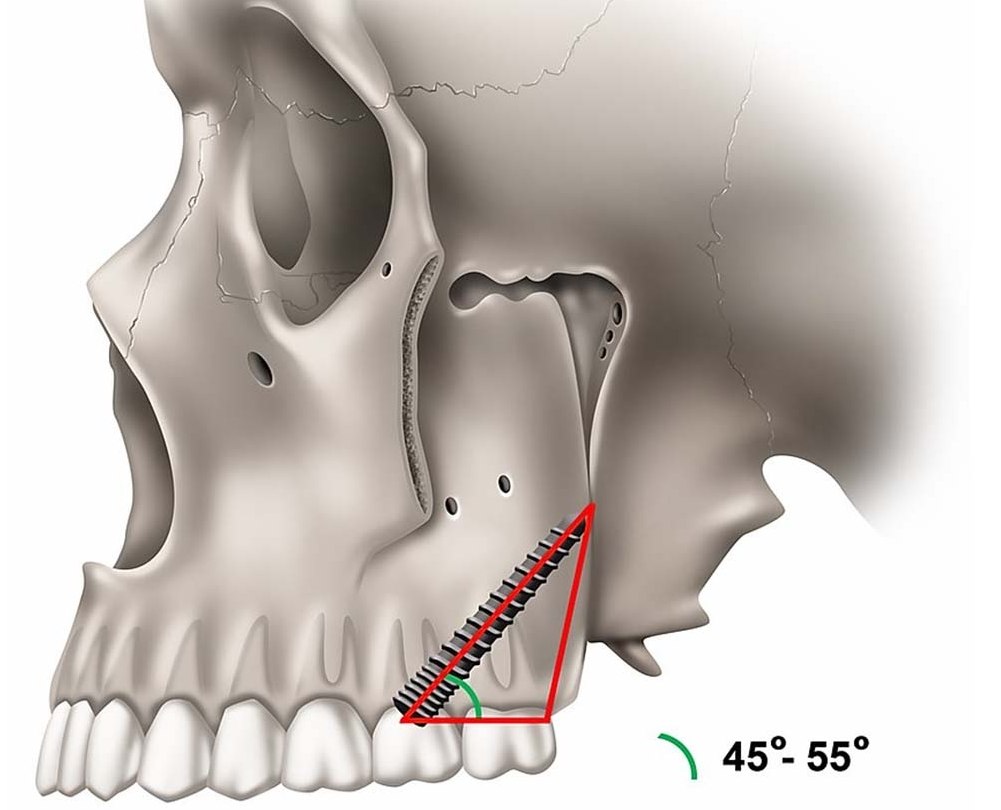
The pterygoid process area lies at the posterior maxilla and includes part of the sphenoid bone, the medial pterygoid plate, and the pterygomaxillary area, adjacent to the maxillary tuberosity. In addition to pterygoid solutions, tuberosity implants anchor into the maxillary tuberosity bone and offer another option for posterior maxillary implant support when bone volume allows.
Key anatomical study landmarks:
- Medial pterygoid plate. It is a bony plate part of the sphenoid bone, providing dense cortical bone.
- Pterygomaxillary implants region. It is the junction of the maxilla and pterygoid process, offering firm support.
- Maxillary tuberosity. It is a part of the maxilla near the last molar region, also used for implant anchorage.
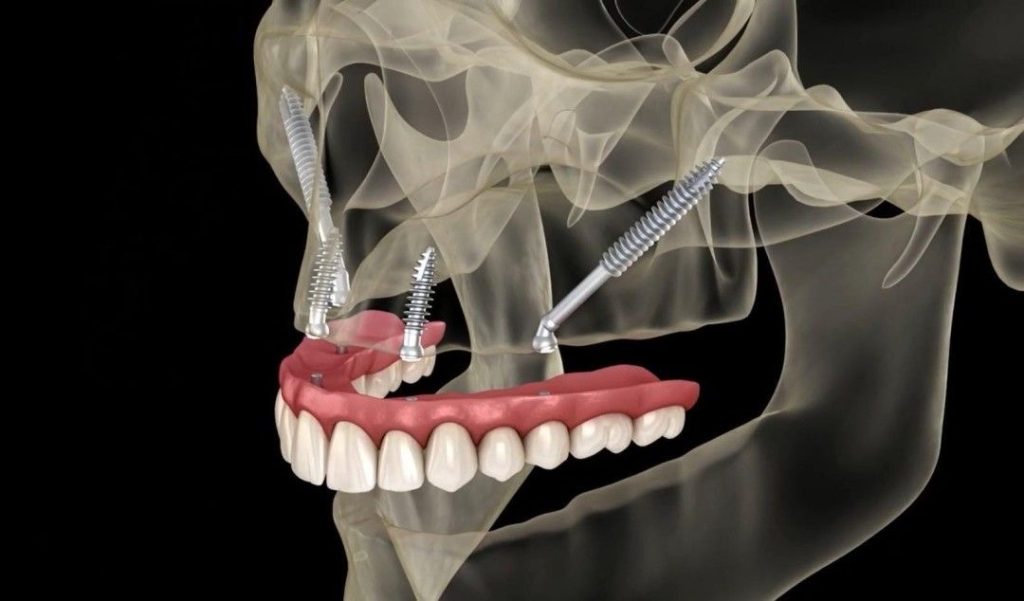
Unlike traditional dental implants in Turkey, placed vertically into the alveolar ridge, Pterygoid dental implants are inserted at an angle/placement (45-70 degrees) to engage this dense bone. This angulated implant placement enables dental implants to bypass resorbed maxillary bone or the pneumatized maxillary sinus.
Typical implant lengths range from 15 to 25 mm, longer than standard dental implants in the jaw but shorter than zygomatic options.
Indications for this technique in Turkey include:
- Severe maxillary atrophy with reduced bone volume;
- Failed bone grafts or sinus lift attempts;
- Extensive sinus pneumatization limits traditional implant placement.
Contraindications in Turkey include:
- Uncontrolled systemic diseases (e.g., uncontrolled diabetes);
- Poor oral hygiene or active gum disease;
- Heavy smoking impairs healing and implant success.
NHS and FDA guidelines emphasise careful assessment to minimise risks (e.g., infection or implant failure).
When Pterygoid implants are used for severe posterior maxilla bone loss
Pterygoid implants provide a critical solution for patients who cannot receive traditional dental implants in the posterior maxilla due to insufficient bone mass.
It arises from:
- Long-term tooth loss leading to alveolar bone resorption;
- Extensive sinus pneumatization, creating a large air-filled cavity;
- Prior unsuccessful bone grafting procedures or sinus lift procedures.
Because these dental implants rely on the dense pterygomaxillary bone, they bypass the need for invasive bone augmentation and shorten implant treatment time. They improve stability for full-arch restorations or fixed prostheses.
Patients with uncontrolled systemic diseases, poor smoking habits, or severe periodontal infections are not candidates, as healing risks outweigh benefits. Informed by NHS and FDA patient safety protocols, clinicians balance potential benefits against risks in each case.
Check candidacy NOW
Candidacy for Pterygoid dental implants: who qualifies and who shouldn’t
Determining candidacy for dental implants involves a comprehensive evaluation.
Qualifying criteria include:
- Insufficient bone mass in the posterior maxilla, preventing traditional dental implants;
- Failed or contraindicated sinus lift procedures, unable to sustain dental implants;
- Patients needing secure anchorage for full-arch prostheses or with loose dentures;
- Reasonable oral hygiene and non-severe bruxism habits.
Candidates who do not qualify include:
- Individuals with systemic diseases impairing bone healing (e.g., uncontrolled diabetes);
- Active smokers or patients with poor oral hygiene;
- Patients with untreated gum disease or infections affecting the implant site.
Quick self-screen to determine if you qualify
The following checklist and self-screen steps can help guide your initial evaluation for dental implants:
- Evaluate your symptoms/history. Do you have missing teeth in the upper jaw, especially posterior molars, or loose prostheses?
- Obtain CBCT imaging. Does your bone anatomy show sufficient pterygoid process area structure?
- Define treatment goals. Are you aiming for fixed teeth restoration or denture support?
- Consider practicalities. Are you prepared for travel to Turkey and related costs?
Pros and cons of Pterygoid implants vs bone grafting and sinus lift


Choosing between pterygoid implants and traditional bone grafting procedures in Turkey requires understanding the benefits and limitations.
Benefits
- Reliable anchorage in dense pterygoid bone ensures implant stability even with severe maxillary atrophy.
- Frequently compatible with immediate loading, allowing same-day provisional teeth.
- Avoids morbidity, complications, and longer recovery linked to grafting or sinus lifts.
- Shorter overall treatment time and less invasive surgery improve patient experience.
Limitations
- Pterygoid solutions require advanced osseointegration surgery skills due to their angulated placement and proximity to key anatomical structures.
- Posterior access complicates hygiene and maintenance.
- Proximity to the maxillary sinus and important vascular structures increases planning complexity.
- Not suitable for all patients, depending on anatomy and health conditions.
Despite these factors, the FDA and NHS confirmed that with appropriate protocols and patient selection, risks remain low and outcomes are positively predictable.
Pterygoid and Zygomatic implants: differences, when to combine, and outcomes (2025)
Understanding the distinctions between pterygoid implants and zygomatic options helps clarify their clinical applications in Turkey.
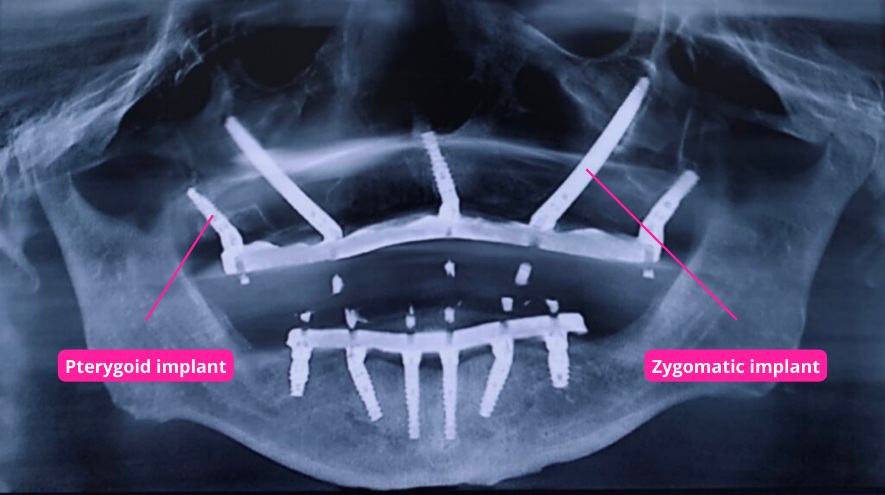
Comparison of Anchorage Sites, Lengths, and Protocols
Key differences in application help determine the best implant choice in Turkey:
- Anchorage site. Pterygoid implants secure into the pterygoid process area, the medial pterygoid plate, and the pterygomaxillary region, while zygomatic options anchor to the zygomatic bone (cheekbone).
- Implant length and angulation. Pterygoids range from 15 to 25 mm and are placed at steep angles (45–70 degrees). Zygomatic implants are longer, often between 30 and 52 mm, requiring more extensive surgical expertise due to their length and anatomical positioning.
- Clinical situations. Pterygoid implants are suitable for moderate to severe bone loss in the posterior maxilla. Zygomatic solutions are preferred in cases of extreme maxillary atrophy or when the anterior maxilla lacks sufficient bone.
- Protocols. Full-arch rehabilitation often involves combining two pterygoid implants with anterior dental implants, sometimes complemented by zygomatic solutions, to optimise support and load distribution.
Clinical Outcomes (2023-2025)
Recent clinical studies from 2023 to 2025 in Turkey demonstrate that both pterygoid implants and zygomatic solutions achieve high survival rates – around 95-96% in mid-term follow-ups. Some well-controlled prospective cohorts report 100% survival under immediate loading protocols when strict surgical and prosthetic protocols are followed.
The decision to use either implant type or to combine them depends on patient anatomy, bone quality in the pterygoid region versus the zygoma, and specific prosthetic requirements. They provide versatile solutions for patients with severe maxillary atrophy seeking full arch implant-supported restorations.
Compare your options
Success rates, immediate loading, and clinical outcomes
Current evidence confirms the reliability of pterygoid implants in Turkey:
- Mid-term follow-ups report survival rates near 95% comparable to traditional dental implants.
- Small prospective cohorts (1-year) under strict protocols document 100% survival with immediate loading, supporting same-day restorations.
The main success factors include:
- Quality and density of pterygoid plate bone (D2 bone preferred)
- Accurate surgical implant placement with optimal angulation and insertion torque
- Proper restorative design ensuring balanced functional load distribution
These findings highlight the importance of experience and modern digital planning in implant success.
Pterygoid implant placement: planning for prosthesis (step-by-step)
Successful implant placement in the pterygoid plate region follows a precise sequence:
- CBCT and planning. Comprehensive imaging guides detailed anatomical assessment and risk mitigation in Turkey.
- Surgical guide and angulation. Use of 3D-printed guides ensures correct implant trajectory.
- Osteotomy path creation. Controlled drilling advances along the planned angled path to dense bone.
- Insertion torque and stability testing. Achieving firm primary stability (>35 Ncm) is critical for immediate loading decisions.
- Immediate vs delayed loading. Based on torque and bone quality, decide on provisional prosthesis timing.
- Prosthesis fabrication and placement. Temporary prostheses allow early function, followed by definitive restoration after osseointegration.
- Follow-up and hygiene coaching. For international patients, staged visits and remote monitoring help ensure implant longevity.
Costs in Turkey (2025): Pterygoid implants vs Zygomatic vs Grafting
Several factors influence the cost of pterygoid implants in Turkey:
- Advanced imaging (CBCT scans) and diagnostics;
- Choice of general vs local anesthesia;
- Implant brand and quality assurance (many internationally recognised brands used by VK Smile Studio);
- Number and type of dental implants (pterygoid, zygomatic, or traditional);
- Prosthetic components design (full-arch, bridges, crowns);
- Surgeon expertise and clinic reputation in Turkey’s regulated health tourism environment;
- Potential need for pterygoid implants adjustments or revisions.
Indicative pricing from competitor insights:
- Pterygoid implants: £800 – £1,200 per implant
- Zygomatic implants: £1,500 – £2,500 per implant
- Traditional dental implants with bone grafting vary depending on complexity
Turkey offers competitive rates while ensuring quality, transparency, and English-speaking patient coordinators, enhancing the travel patient experience. Your individualised plan determines the final quote.
Get cost estimate
Aftercare, hygiene access, and long-term maintenance
Recommended pterygoid implants aftercare includes:
- First week. Gentle mouth rinses, avoid trauma to the surgical site;
- 1-3 months. Soft brushing and use of interdental brushes to clean hard-to-reach posterior dental implants;
- 6-12 months. Professional cleanings and peri-implantitis prevention checks.
Interdental aids help overcome challenges posed by posterior implant hygiene. Patients treated at VK Smile Studio in Turkey receive tailored warranties and routine follow-ups to safeguard implant longevity.
Patient safety, materials, and regulation in Turkey
Dental clinics in Turkey follow:
- FDA guidelines on implant materials safety and testing, including the recent 2024 updated performance criteria for endosseous dental implants;
- Turkish Ministry of Health regulations governing international health tourism, ensuring authorised clinics meet rigorous standards for foreign patients;
- NHS-style informed consent protocols prioritising transparency and patient education before treatment.
Clinics use biocompatible titanium dental implants and adhere to sterilisation protocols to minimise infection risks. It provides peace of mind for patients choosing Turkey for complex implant placement.
Frequently asked questions about pterygoid implants
What is a Pterygoid implant, and when is it used in the posterior maxilla?
A pterygoid implant is an angled dental implant inserted into the dense bone of the pterygoid region at the back of the upper jaw. It is used in Turkey when there is insufficient bone in the posterior maxilla to support traditional dental implants, often avoiding the need for grafting or sinus lifts.
Who is a candidate for Pterygoid dental implants if I have insufficient bone mass?
Candidates in Turkey include those with inadequate posterior maxillary bone, failed sinus lifts, or issues with loose dentures. However, uncontrolled systemic diseases or poor oral hygiene can disqualify patients.
Do Pterygoid implants allow immediate loading and same-day teeth?
Yes, when the implant attains sufficient stability and surgical protocols are followed, immediate loading is possible, enabling patients to have provisional teeth the same day as implant surgery.
Ask about loading – Ask
What is the success rate of Pterygoid implants vs Zygomatic implants (2025 evidence)?
A recent retrospective study indicates both implant types have mid-term survival rates near 95-96%, with some immediate-loading protocol cohorts demonstrating 100% survival under strict guidelines.
Are Pterygoid and Zygomatic implants placed together for full-arch cases?
Yes, in complex cases, combining pterygoid and zygomatic implants optimises support and load distribution for full-arch prostheses, especially in severely atrophic maxillae.
What are the risks and complications during implant placement near the maxillary sinus?
Risks include sinus membrane perforation, infection, or nerve injury. Experienced implant dentistry surgeons in Turkey mitigate these risks through imaging and surgical planning.
How do costs in Turkey compare for Pterygoid and Zygomatic implants vs sinus lift + grafting?
Turkey offers competitive prices, with pterygoid implants less costly than zygomatic implants and more affordable than combined sinus lift and grafting procedures. Transparent quotes and English-speaking coordinators are common features in clinics in Turkey like VK Smile Studio.
Conclusion: Are Pterygoid implants right for you in 2025?
For patients facing severe posterior maxillary bone loss, pterygoid implants offer a proven, less invasive alternative to grafting with excellent functional and aesthetic outcomes. With immediate loading often possible and Turkey’s regulatory environment supporting safe, high-quality care, choosing experienced surgeons, including those at VK Smile Studio, can restore your smile. In 2025, pterygoid implants will be at the forefront of advanced dental rehabilitation.
Book pterygoid consult