While traditional dentures were once the only option for tooth loss, dental implants have revolutionized restorative dentistry. By integrating directly with the jawbone, these anchors provide a level of stability and bite force that mimics natural teeth. Beyond the obvious aesthetic boost, they play a critical role in preventing bone loss and maintaining the natural contours of the face.
Despite their high success rate, dental implants are not a “one-size-fits-all” solution. The procedure requires a specific biological environment to succeed. Several factors can influence whether a patient is ready for surgery:
- Medical Considerations: Chronic conditions like uncontrolled diabetes or autoimmune disorders can hinder the body’s ability to heal and integrate the implant.
- Lifestyle Factors: Habits such as heavy smoking significantly increase the risk of implant failure by restricting blood flow to the gums.
- Bone Density: Since the implant relies on "osseointegration" (fusing with the bone), patients with significant bone thinning may require preparatory procedures like bone grafts.
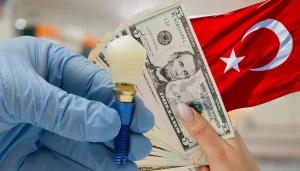
In recent years, Turkey has emerged as a global hub for restorative dental work. Many patients are drawn by the combination of high-tier clinical expertise and cost-effective pricing structures.
However, traveling abroad for surgery requires due diligence. At VK Smile Studio, we emphasize that safety and long-term aftercare should never be sacrificed for a lower price tag. Understanding the materials used, the qualifications of the surgeon, and the expected recovery timeline is essential for anyone considering an international dental journey.

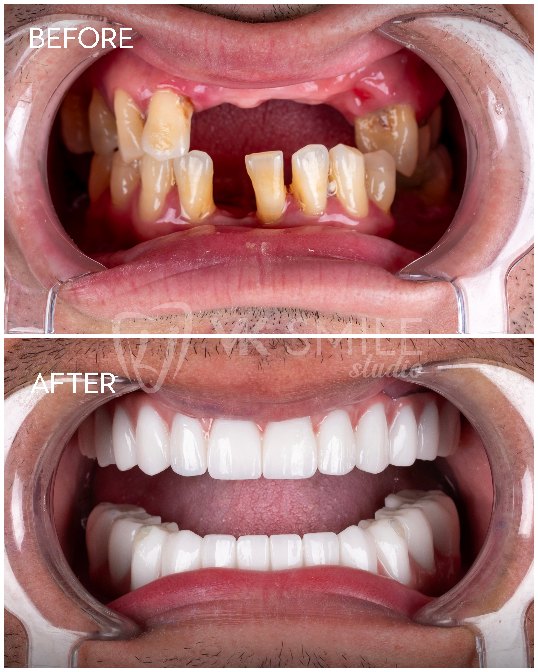


Trustindex verifies that the original source of the review is Google. I came from US. I found VK Smile after my research and I made the right decision. Today I can eat, smile with confidence. Thank you so much..Posted on GoogleTrustindex verifies that the original source of the review is Google. Wow what can I say from the pick up from the airport to the accommodation then on to VK smile studio the treatment was outstanding start to finish, every question answered so friendly couldn’t recommend them enough and thank you so much for giving me my smile backPosted on GoogleTrustindex verifies that the original source of the review is Google. Excellent service, cannot fault them, professional and talked me through every step, thoroughly recommendPosted on GoogleTrustindex verifies that the original source of the review is Google. Отличная стоматологическая клиника! Очень внимательный и профессиональный персонал. Спасибо за качественное лечение и заботу о пациентах.Posted on GoogleTrustindex verifies that the original source of the review is Google. در کلینیک vk smile studio آنتالیا شاهد درمان بیماران زیادی از جمله خودم بودم و می توانم از محیط دوستانه و تیم بسیار حرفه ای این کلینیک به خاطر خاطرات زیبای که برایم ساختند تشکر کنم،از ابتدا تا انتهای این سفر در کنارم بودن و به تمام سوالات من صبورانه و دوستانه پاسخ دادند ،از همه ی شما ممنونم که در کنارم بودین و امیدوارم شاهد موفقیت های بیشتر کلینیک شما در آینده باشم🥰🥰🥰Posted on GoogleTrustindex verifies that the original source of the review is Google. Bardzo miła obsługa, profesjonalni lekarze i świetna opieka. Jestem bardzo zadowolona z leczenia. Dziękuję, VK Smile 🙂↕️Posted on GoogleTrustindex verifies that the original source of the review is Google. Very professional and just an overall great experience with vksmile would recommend to anyone they don't disappoint . From meeting in Glasgow to finals I cannot recommend vk smile highly enough amazing dentist from lady who serves you coffee all day to the fantastic reception staff and the amazing dentists if you are thinking of going to havd your teeth done give vk a go you will not be disappointed 10/10Posted on GoogleTrustindex verifies that the original source of the review is Google. From booking to completing the treatment for my teeth - service was exceptional! Communication is briliant, all questions answered. I have 3 implants, teeth look stunning and super natural. Dentist is very good - has a good knowledge and happy to help with anything. All staff is amazing, so friendly, I felt like visiting family. I absolutely do recommend it! 6 months post treatment. The clinic in UK is only for check ups and very small adjustments - for any major work after the treatment - you would have to go back to Turkey.

Table of Contents
The Mechanics of Dental Implants

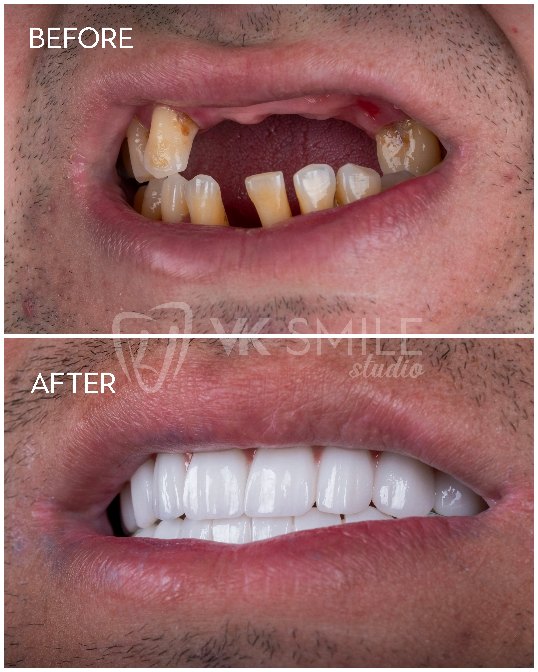
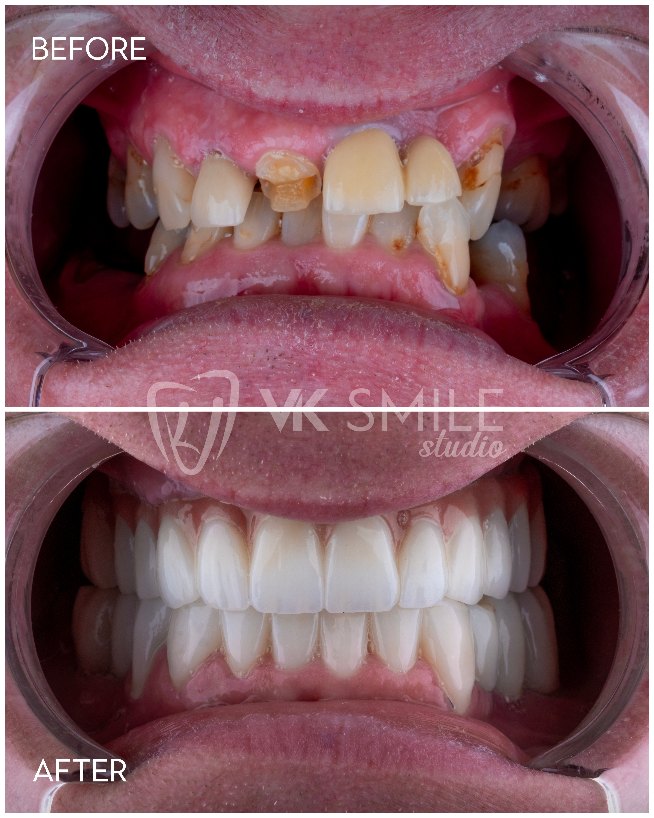
At their core, dental implants are precision-engineered titanium posts designed to act as a substitute for a missing tooth root. Unlike surface-level treatments, these anchors are surgically embedded into the jawbone.
The success of the procedure relies on a remarkable biological event called osseointegration. Over the course of several months, the living bone tissue grows around and fuses with the titanium surface, creating a permanent, rock-solid foundation. Once this bond is fully matured, the implant can be fitted with a custom crown, bridge, or a full set of teeth.
For this integration to be successful, a patient’s “biological toolkit” must be in top shape. This includes:
- Optimal Bone Volume: To provide enough "grip" for the screw.
- Gum Health: To protect the site from infection.
- Healing Capacity: The body’s natural ability to repair tissue without interference from underlying health issues.
If these conditions are not met, the risk of implant failure increases significantly.
General requirements for successful dental implants
Before explaining who is not suitable, it is important to understand what makes an ideal candidate. Dental professionals usually look for several key factors.
These include:
- Healthy gums free from active infection
- Adequate bone density to support implants
- Good overall health and healing capacity
- Commitment to long-term oral hygiene
When one or more of these factors is missing, dental implant treatment may not be recommended.
Who Should Avoid Dental Implants?
While highly successful, dental implants aren’t for everyone. Certain factors can compromise the surgery or cause the body to reject the anchor.
Below are the most common reasons implants may not be suitable.
People with active gum disease
Gum disease is one of the most common reasons patients are deemed unsuitable for dental implants. Conditions such as gingivitis and periodontitis cause inflammation, bone loss, and damage to the tissues that support teeth.
Placing dental implants in the presence of gum disease significantly increases the risk of infection and implant failure. Treatment may still be possible, but only after the gums are treated and returned to a stable, healthy state.
Patients with low bone density
Bone density plays a crucial role in implant stability.Severe bone loss can prevent implants from anchoring securely.
In some cases, bone grafting or sinus lift procedures can rebuild lost bone. However, patients with extreme bone loss may not be suitable candidates even with advanced techniques.
People with uncontrolled medical conditions
Certain systemic health conditions interfere with healing and increase surgical risks. These include uncontrolled diabetes, autoimmune diseases, bleeding disorders, and conditions requiring long-term steroid use.
Patients with well-managed conditions may still qualify, but those with poorly controlled health issues are often advised to postpone or avoid dental implants.
Temporary solutions such as removable false teeth or orthodontic options are usually recommended until growth is complete.
Patients unable to tolerate local anaesthetic
Dental implant surgery is usually performed under local anaesthetic. Most patients tolerate this well, but those with severe allergies or extreme dental anxiety may face challenges.
Sedation options can sometimes help, but if anaesthesia cannot be administered safely, dental implants may not be appropriate.
People with poor oral hygiene habits
Dental implants require ongoing care. Patients who struggle with brushing, flossing, or attending check-ups are at higher risk of complications such as peri-implantitis.
Psychological and expectation-related factors
Suitability for dental implants is not purely physical; psychological readiness and realistic expectations play an equally important role in long-term success. Patients must understand that dental implants require careful planning, healing time, and ongoing maintenance. Those expecting instant or guaranteed results may be disappointed, as implant treatment is a staged medical process rather than a one-day cosmetic fix. Willingness to follow professional advice, attend follow-up appointments, and maintain excellent oral hygiene is essential. Patients who are unwilling or unable to commit to aftercare instructions, lifestyle adjustments, or regular dental reviews may face higher risks of complications or implant failure over time.
When dental implants should be delayed rather than avoided
Being unsuitable for dental implants at one point in time does not always mean permanent exclusion. Many patients can become suitable after addressing underlying problems.
This may include:
- Treating gum disease
- Improving bone density with grafting
- Stopping smoking
- Stabilising medical conditions
A detailed consultation with VK Smile Studio helps determine whether treatment should be delayed or avoided altogether.
Considering dental implants in Turkey
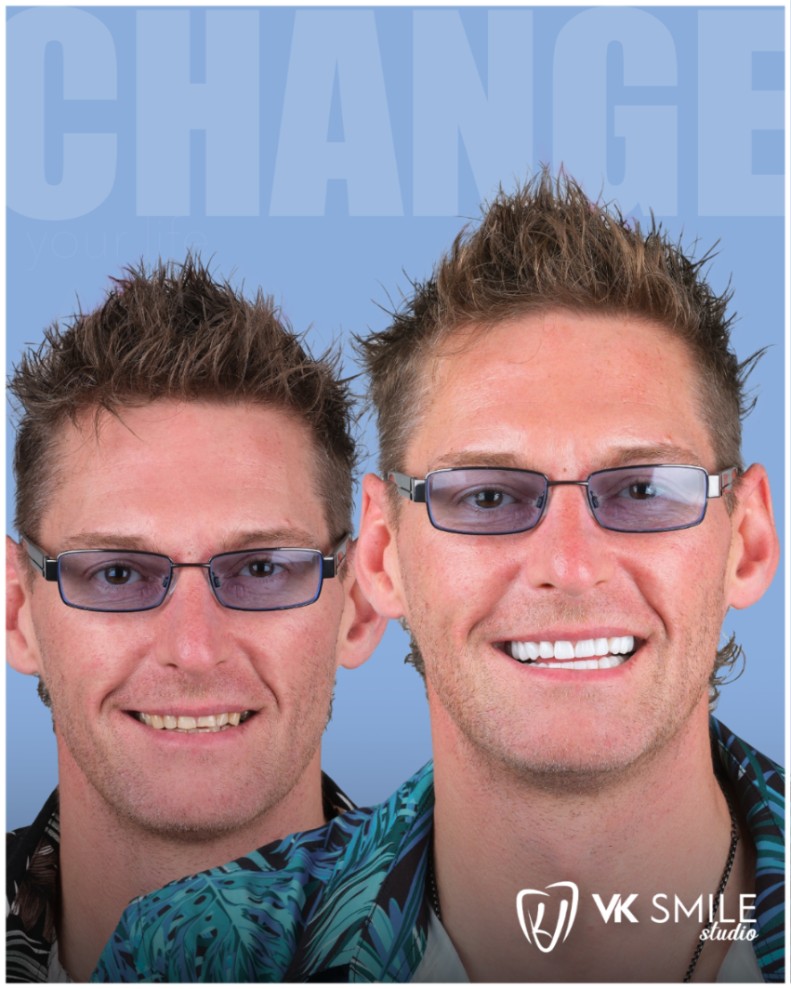
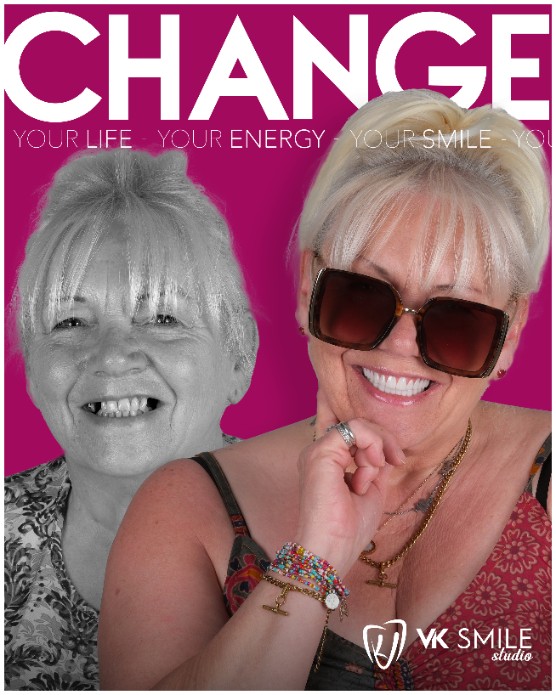
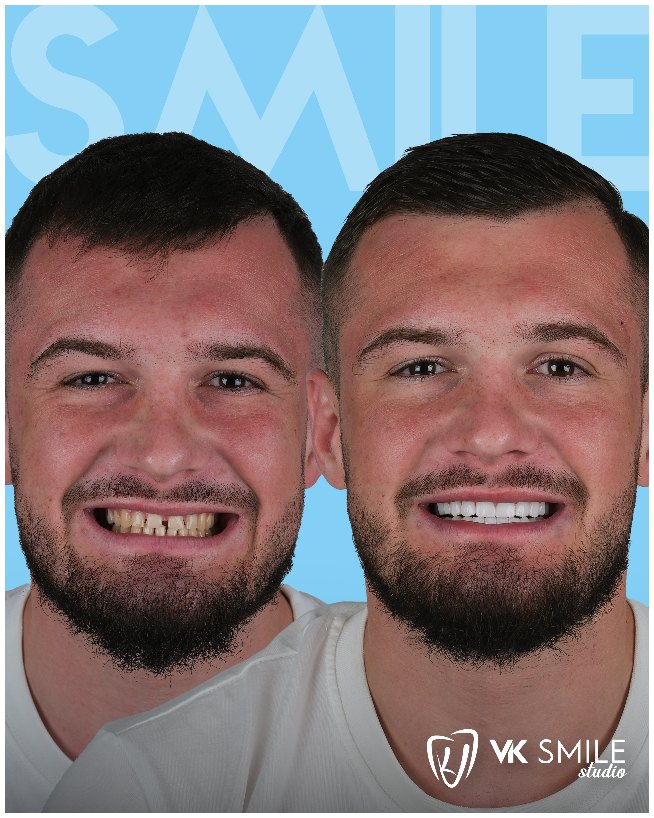
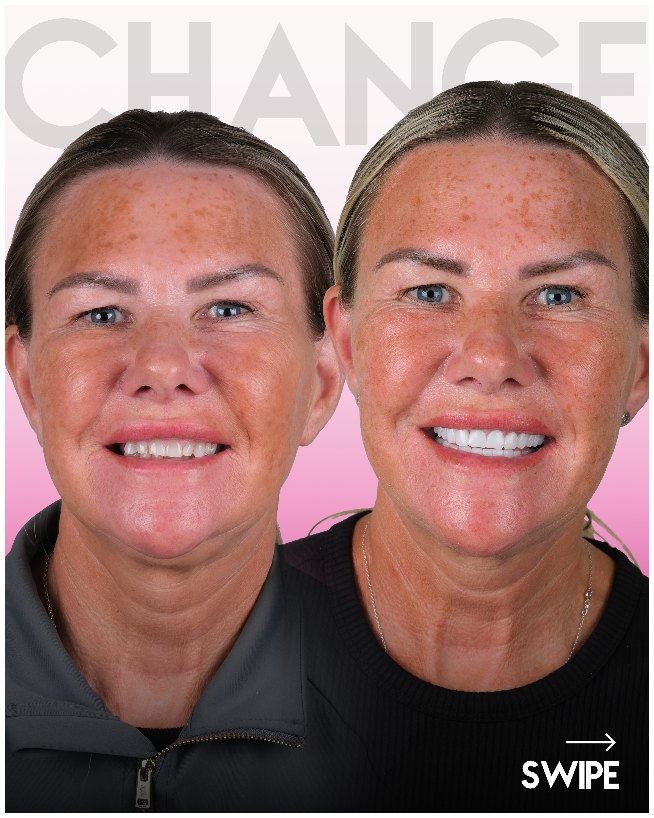


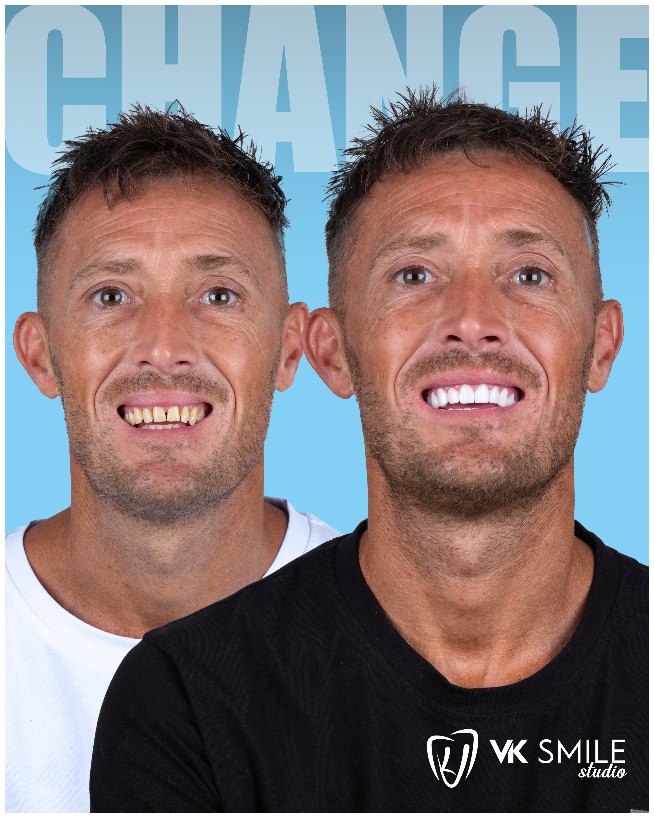
Interest in dental implants in Turkey has grown rapidly over the past decade. Turkey has positioned itself as a leading destination for dental tourism, attracting patients from the UK and Europe.
Many people search online for dental implants Turkey reviews and ask, is Turkey a good place for dental work? The answer depends on careful patient selection, clinic standards, and realistic expectations.
Turkey offers modern clinics, internationally trained dentists, and advanced technology. Cities such as Antalya and Istanbul are particularly popular, with competitive pricing for complex treatments.
Patients often compare full mouth dental implants Turkey price options with UK costs and are drawn by advertised savings.
Why Turkey appeals to dental implant patients
Turkey has invested heavily in healthcare infrastructure. Dental clinics in Turkey often feature:
- State-of-the-art equipment
- English-speaking dental teams
- Shorter waiting times
- Competitive treatment packages
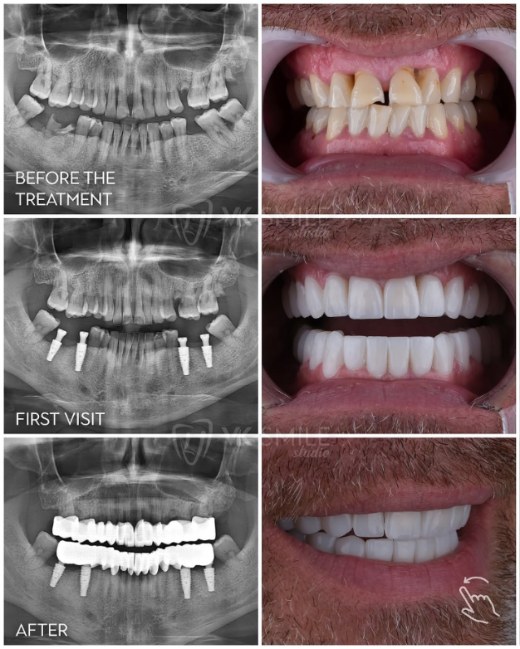
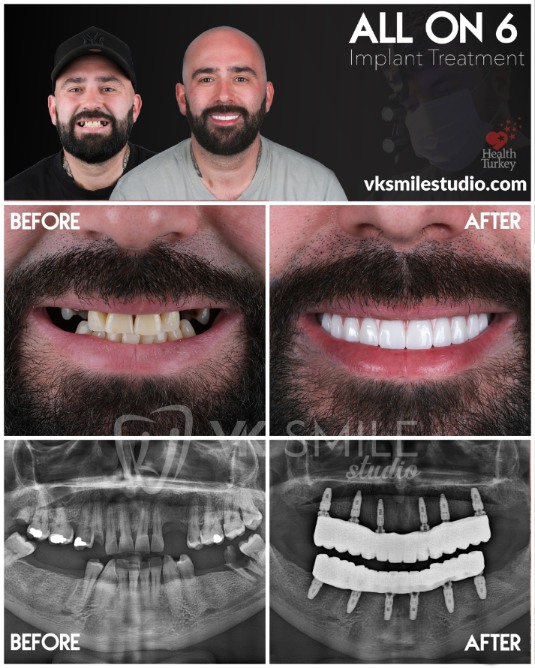
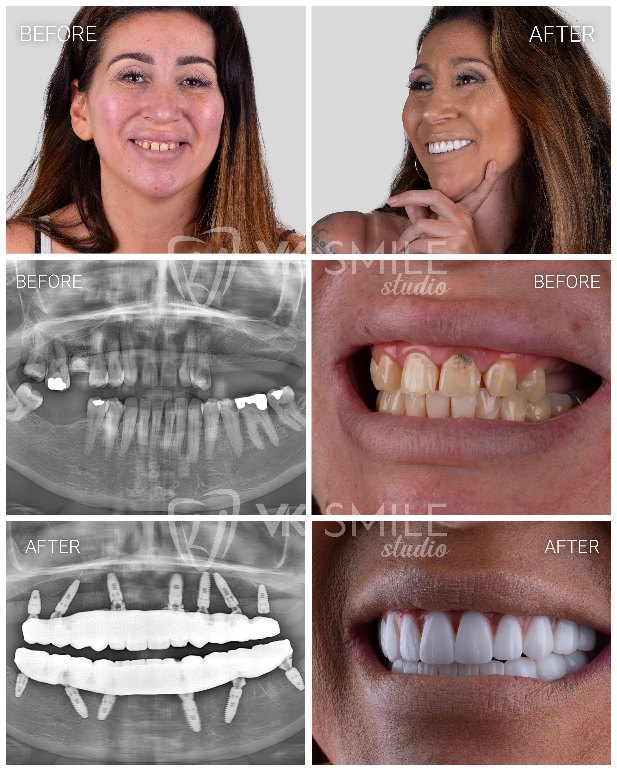
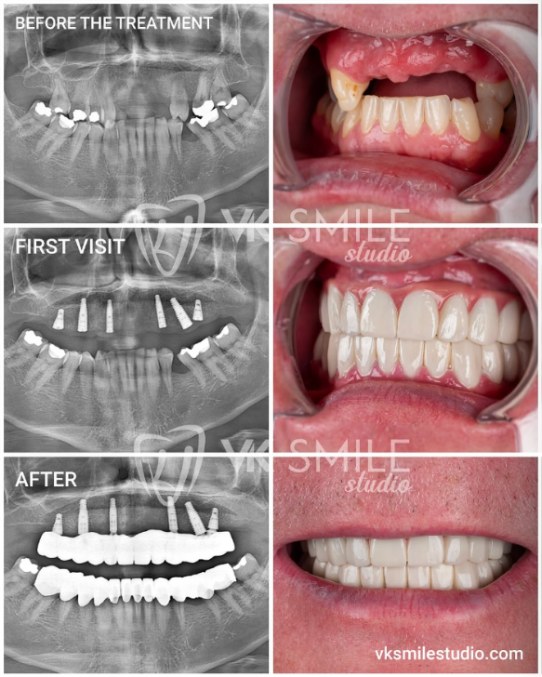
As a result, searches for full mouth dental implants Turkey package deals continue to increase, especially among patients seeking full-arch restorations.
Our All-inclusive Implant Packages
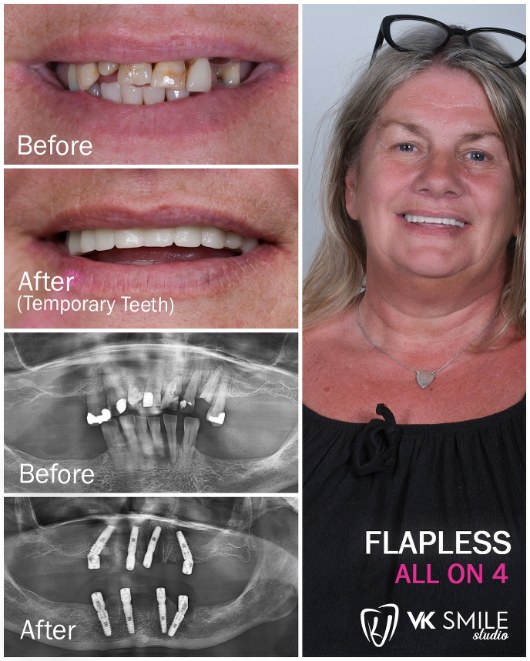
All on Four
Package Content:
- Consultation
- Hotel Accommodation (With a Free Breakfast)
- Panoramic X-Ray & Tomography
- VIP Transfer (Airport - Hotel - Clinic)
- Social Events during Treatment
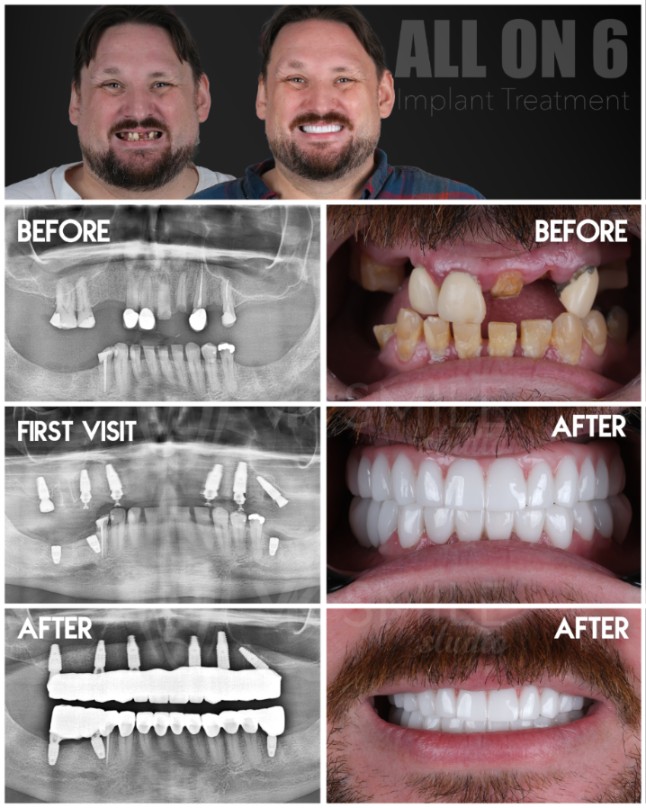
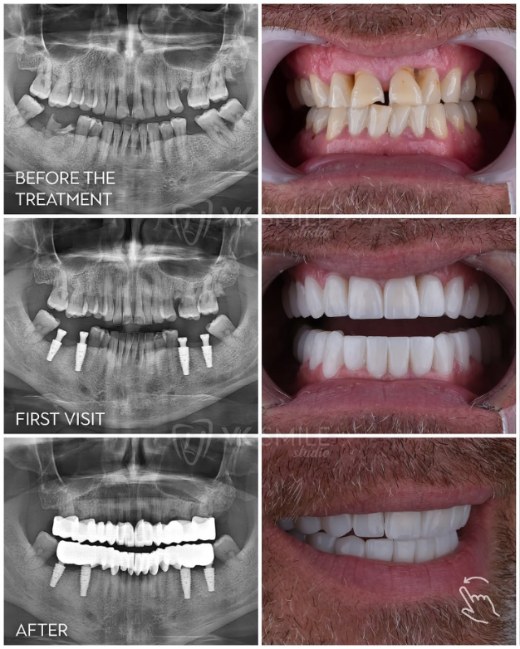
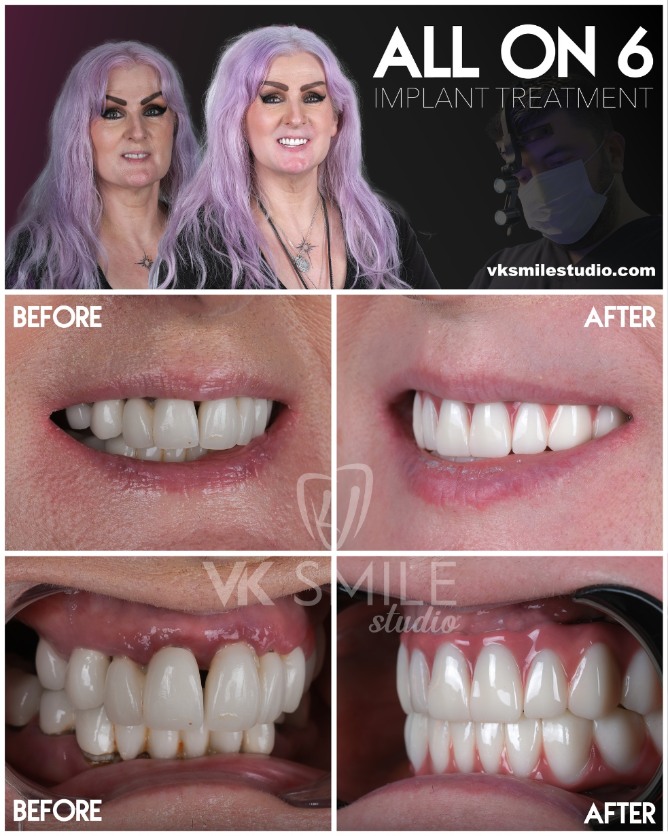
All on Six (Fixed Dental Implant Bridge)
Package Content:
- Consultation
- Hotel Accommodation (With a Free Breakfast)
- Panoramic X-Ray & Tomography
- VIP Transfer (Airport - Hotel - Clinic)
- Social Events during Treatment
Understanding costs realistically
While full mouth dental implants Turkey price Antalya clinics may appear significantly lower, patients must look beyond headline figures. Travel, accommodation, aftercare, and potential revisions all form part of the true cost. Is Turkey a good place for dental work? For many patients, the answer is yes,provided they choose reputable clinics, qualified dentists, and prioritise proper assessment and long-term aftercare over low prices alone.
Choosing a provider like VK Smile Studio helps ensure treatment planning prioritises safety rather than price alone.
Who should avoid dental implants abroad
Travelling to Turkey for dental implants is not suitable for everyone. Some patients face higher risks when receiving treatment overseas.
These include:
- Patients with complex medical conditions
- Those unable to stay for follow-up appointments
- People with severe dental anxiety or communication barriers
- Patients choosing treatment based only on cost
Understanding whether Turkey is the right option requires honest assessment and professional advice.
The reality of “Turkey teeth” risks
The term “Turkey teeth” is often used negatively online. In reality, the risks usually stem from aggressive treatment plans, unnecessary extractions, or inadequate aftercare rather than the country itself.
When dental implants in Turkey are planned responsibly, outcomes can be excellent. Problems arise when patients prioritise speed and price over long-term health.


Alternatives to dental implants
When dental implants are not suitable, alternative treatments may be recommended. These options aim to restore function and appearance without surgery.
Common alternatives include:
- Removable false teeth
- Fixed dental bridges
- Resin-bonded bridges
Each option has advantages and limitations, and suitability varies between patients.
Long-term success depends on commitment
Dental implants require lifelong care. Whether treatment is carried out locally or in Turkey, long-term success depends on maintaining healthy gums, good oral hygiene, and regular dental reviews.
Patients who follow professional advice closely enjoy the best outcomes.
FAQ
Which Patients Face Higher Risks for Dental Implants?
Individuals with insufficient bone density, active gum disease, or uncontrolled chronic illnesses like diabetes are often poor candidates. Heavy smoking and medical treatments like radiation therapy can also significantly interfere with the body’s ability to heal and fuse with the implant.
Is it safe to go to Turkey for dental implants?
Yes, it can be safe to go to Turkey for dental implants when treatment is provided by reputable clinics, experienced dentists, and when patients are properly assessed and followed up.
What are the risks of getting Turkey teeth?
The risks of Turkey teeth usually relate to rushed treatment, unrealistic expectations, and poor aftercare rather than dental care standards in Turkey itself.
When are dental implants not suitable?
Dental implants are not suitable when there is active infection, inadequate bone density without grafting options, uncontrolled health conditions, or inability to tolerate local anaesthetic.
Who should avoid dental implants?
Patients with severe medical risks, untreated gum disease, unrealistic expectations, or inability to commit to long-term care should avoid dental implants until these issues are resolved.
The importance of personalised assessment
No two patients are the same, which is why dental implant suitability cannot be determined by age alone or by online checklists. A personalised assessment considers oral health, bone density, medical history, lifestyle habits, and expectations. During a professional consultation, scans and clinical examinations are used to assess bone quality and gum health. This step is especially important for patients considering dental implants in Turkey, as remote planning without proper diagnostics increases risk. Clinics working with VK Smile Studio emphasise careful screening to ensure implants are recommended only when long-term success is likely.
Bone grafting and advanced procedures: are they always a solution?
Many patients believe that bone grafting automatically makes everyone suitable for dental implants. While grafting can restore bone volume, it is not always appropriate.
Bone grafting may not be suitable for:
- Patients with severe healing disorders
- Heavy smokers unwilling to quit
- Individuals with compromised immune systems
Even when grafting is successful, it extends treatment time and cost. Patients must understand that implants are a staged process, not an instant fix.
Impact of Age on Dental Implant Candidacy
Older adults with good general health, healthy gums, and sufficient bone density often do very well with implants.
However, very elderly patients with multiple unmanaged health conditions may face higher risks. Careful assessment is essential to balance quality of life benefits against surgical stress.
Dental anxiety and implant treatment
Severe dental anxiety can affect implant outcomes. Fear may prevent patients from attending follow-up appointments or maintaining proper oral hygiene.
While sedation dentistry can help, some individuals may be better suited to non-surgical alternatives if anxiety cannot be managed effectively.
Oral hygiene and long-term implant maintenance
Dental implants require the same, if not higher, level of care as natural teeth. Poor plaque control can lead to inflammation around implants, known as peri-implant disease.
Patients must be prepared to:
- Brush twice daily
- Use interdental cleaning aids
- Attend routine professional reviews
Without this commitment, implants may fail regardless of where they are placed.
Dental implants versus false teeth
Compared to removable false teeth, dental implants offer superior stability and comfort. However, false teeth may be a safer option for patients with medical risks or limited bone density.
Modern dentures have improved significantly and can still provide good aesthetics and function when implants are not suitable.
Managing expectations for full mouth dental implants
Full arch treatments are complex and require careful planning. Patients researching full mouth dental implants Turkey price options should understand that suitability depends on bone quality, bite forces, and overall health.
Full mouth dental implants Turkey package deals often advertise fast results, but responsible providers prioritise staged treatment and healing time.
Antalya and regional pricing considerations
Interest in full mouth dental implants Turkey price Antalya clinics continues to grow. Antalya is popular due to its accessibility, modern clinics, and competitive pricing. However, regional pricing differences should never override clinical suitability. Choosing treatment based solely on location or cost increases the likelihood of complications.
Aftercare and follow-up planning
Aftercare is a critical part of implant success. Patients travelling to Turkey must plan for long-term maintenance, whether locally or through coordinated care.
Lack of follow-up is a common reason some patients are advised against implants abroad.
Ethical treatment planning
Ethical clinics focus on preserving natural teeth whenever possible. Overuse of extractions to place implants is a concern often linked to negative dental implants Turkey reviews.
A conservative, health-first approach leads to better long-term outcomes.
Conclusion
Dental implants are one of the most effective solutions for missing teeth, but they are not suitable for everyone. Health status, bone density, gum condition, and patient commitment all play essential roles.
For those considering dental implants in Turkey, careful planning is vital. With responsible assessment and guidance from VK Smile Studio, patients can make informed decisions that prioritise safety, function, and long-term success.